
Living folk arts, colour-drenched festivals, ancient temples, master weavers, Himalayan yoga retreats, and a cuisine of breathtaking variety — India rewards the curious traveller at every turn.
There are destinations you visit, and destinations that visit you back. India belongs firmly in the second category. It arrives in the fragrance of marigold garlands strung across a market lane, in the percussion of drums carried on in the morning air, in the sight of a woman in a crimson saree sitting cross-legged at a handloom, her fingers moving faster than the eye can follow. India is a country carrying 5,000 years of continuous civilization, and that depth is felt in its culture and heritage. It lives in the streets, the kitchens, the folk songs, and the festivals. For travellers drawn to authentic cultural immersion like fine dining, craftsmanship, unique experiences, and genuine human encounters, India offers more per square kilometer than almost anywhere on earth.
The architecture of wonder
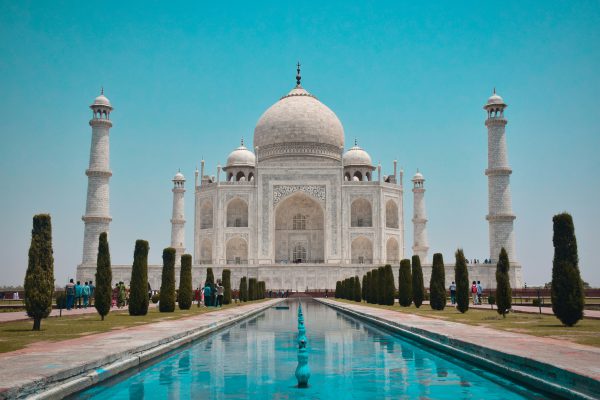
India has 44 UNESCO World Heritage Sites with each one telling a different chapter of an astonishing story. The most popular of them is of course the Taj Mahal in Agra, also one of the 7 wonders of the world, a monument in white marble built in the seventeenth century by Emperor Shah Jahan as an ode to his wife. Its perfection in the symmetry, the inlaid precious stones, the way its colour shifts from rose at dawn to silver at midnight under a full moon is breathtaking . Yet the Taj is only the beginning of what India’s architectural heritage offers.
Travel south to Maharashtra, and you encounter the Ellora Caves — a complex of 34 monasteries and temples carved directly into the Charanandri hills. The scale of ambition here is humbling: craftsmen spent generations carving entire multi-storey temple complexes out of solid rock. It also features the largest single monolithic rock excavation in the world, the Kailash temple, a chariot-shaped monument dedicated to Lord Shiva. Further south, in Tamil Nadu, the Shore Temple at Mahabalipuram stands at the edge of the Bay of Bengal, built by the Pallava dynasty in the seventh century. In Rajasthan, the Hill Forts like Chittorgarh, Kumbhalgarh, and Amber sweep across the landscape like the spine of an ancient empire. The temples of Khajuraho in Madhya Pradesh, built between 950 and 1050 CE, carry sandstone walls carved with an extraordinary profusion of figures of Gods, celestial beings, and scenes of human life.
Living traditions: The intangible heritage of everyday life
What makes India unusual among great civilizations is that so much of its cultural life remains alive, practiced, and passed down generations as a part of daily life. In the villages of Bihar, women still practice Madhubani painting, drawing intricate, brightly coloured compositions on walls and paper using brushes made from bamboo and cloth. Each motif, the lotus, the fish, the sun, carries encoded meaning, a visual language transmitted across thousands of years. In Maharashtra, the Lavani dance fills festival grounds with energy: a performance tradition characterized by its driving rhythm, expressive footwork, and the emotional range of its songs that can move from celebration to sorrow within a single verse. In Kerala, Kathakali performers spend hours applying elaborate make-up before a single step is taken on stage, honouring a tradition that is simultaneously dance, theatre, and living mythology. The Chhau, masked dance of Jharkhand, the Warli paintings of Maharashtra’s tribal communities, the Pattachitra scroll paintings of Odissa, each state carries its own artistic vocabulary, and a traveller who ventures beyond the famous cities, will find a country of staggering variety.
For visitors with a fondness for craft and design, India’s artisan world is genuinely unmissable. Varanasi produces Banarasi silk brocades woven on handlooms from memory, the patterns of extraordinary complexity produced without a written guide. Jaipur’s block-printers press carved wooden blocks into natural dyes — indigo, madder, turmeric on cotton cloth using techniques unchanged for centuries. Kanchipuram in Tamil Nadu weaves silk sarees whose gold-thread borders are a form of portable art. The blue pottery of Jaipur, the pashmina shawls of Kashmir, the brass casting of Moradabad these traditions fill entire markets, and purchasing directly from a maker is an act of cultural connection as much as shopping. Whatever you bring home carries the memory of the hands that made it.
A country that knows how to celebrate: Holi, Diwali, and Beyond
India is a land of festivals, with a celebration taking place somewhere in the country on almost every day of the calendar. Two of these — Holi and Diwali — have become legendary among international travellers, and experiencing them first-hand is an encounter with collective joy on a scale that Dutch visitors rarely encounter anywhere else.
Holi, the festival of colours, arrives each spring and transforms the streets of north India into something between a carnival and a painting. On Holi morning, strangers and friends alike cover each other in gulal , finely milled colour powder in electric pinks, yellows, and greens while music fills every lane and sweets are passed freely between neighbours.
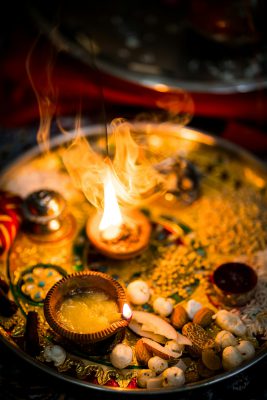
Diwali, the Festival of Lights, arrives in October or November and transforms India into something that must be seen to be fully believed. For five consecutive nights, homes, markets, forts, and city streets are lined with countless diyas, small clay oil lamps — alongside strings of electric light that turn entire cities into glowing spectacles. In Varanasi, fifteen days after Diwali, comes Dev Deepawali, when the ghats along the Ganges are lit with over a million clay lamps, their reflections trembling on the water, as the Ganga Aarti ceremony sends flames rising in slow arcs above the river.
India’s festival calendar extends well beyond these two landmarks. The Pushkar Camel Fair in November draws traders, folk musicians, and visitors into a desert spectacle that has continued for centuries. In Kerala, the Onam festival in August / September is celebrated with boat races on the backwaters, floral carpets called pookkalam laid at doorsteps, and an elaborate multi-course feast served on banana leaves. Ganesh Chaturthi in Maharashtra in August and September brings enormous clay statues of the elephant-headed deity into the streets of Mumbai, accompanied by ten days of processions, dance, and drumming before the idols are ceremonially immersed in the sea. The 5 day Durga Puja celebrated in West Bengal is an amazing amalgamation of devotion and creative artistic brilliance, which has to be seen to be believed. Wherever you travel in India and at whatever time of year, you are likely to arrive at a celebration without having planned to.
Yoga, Ayurveda, and the art of the retreat
Yoga originated in India at least 5,000 years ago, and travelling to its birthplace transforms the practice entirely. Rishikesh, nestled in the Himalayan foothills along the Ganges and widely regarded as the yoga capital of the world, offers programmes that range from week-long ashram stays to glamping retreats where guests sleep under canvas beside the river. The experience carries a depth and authenticity that no studio class in Amsterdam can replicate: the teachers here have practiced for decades, the setting is genuinely sacred, and the daily rhythm, meditation at dawn, pranayama at dusk, simple vegetarian meals in between, produces a quality of rest that most visitors describe as unlike anything they have experienced before.
Kerala in India’s south has built an equally distinguished reputation around Ayurveda, the 3,000-year-old system of holistic medicine. Resorts and wellness centres across the state offer personalized Panchakarma programmes, therapeutic cleansing treatments combining herbal oils, steam therapies, and carefully tailored dietary plans often lasting between seven and twenty-one days. Luxury glamping options now exist alongside traditional ashrams, for visitors who want the experience of sleeping surrounded by nature without sacrificing comfort. The global wellness tourism market is growing rapidly, and India as the country that gave the world yoga, Ayurveda and meditation remains its most compelling destination.
A cuisine unlike any other
Indian cuisine is a continent of flavours where the cuisine changes every 300 kilometers. The buttery, slow-cooked dal makhani of Punjab bears almost no resemblance to the coconut-rich fish curries of Kerala, which in turn share nothing with the aroma of a Lucknow biryani or the fiery Chettinad dishes of the deep south. The food traditions of India, rooted in centuries of practice and refined by millions of cooks across thousands of communities, gives cooking a complexity and satisfaction that surprises almost every visitor.
Street food is where India’s culinary confidence is most immediately felt. Mumbai’s pav bhaji, Kolkata’s kathi rolls, Delhi’s chaat, are the foods that remain in the memory long after the monuments have blurred. Cooking classes taught by local home cooks and professional chefs have become one of the most popular experiential tourism offerings in India.
The journey itself
India asks something of its visitor’s curiosity, and a willingness to be surprised by what turns up. It will offer you a kindness from a stranger in a moment of confusion, and a meal you did not know you needed from a kitchen you would never have found alone. It is a country that has carried 5,000 years of human ambition, creative brilliance, and daily life simultaneously, and it wears all of it at once, ancient and modern, grand and intimate, overwhelming and deeply welcoming. travellers, who make the journey, tend to return with a particular kind of restlessness: not the exhaustion of someone who has ticked boxes, but the feeling of someone who knows they have only just begun.
Written by The Embassy of India, The Hague