

The 2026 FIFA World Cup, to be staged across United States, Canada and Mexico from 11 June to 19 July, will be the largest in history and, in many ways, the most transformative. Expanding to 48 teams for the first time, the tournament represents a significant shift in both scale and philosophy, opening the door to new footballing nations while placing fresh demands on the established powers. It is a World Cup designed to reflect the truly global nature of the sport, but also one that raises questions about balance, quality and the very essence of elite competition.
Qualification for this expanded tournament has already delivered a field rich in diversity and narrative. While the usual heavyweights have navigated their way through increasingly complex pathways, the broader structure has allowed a number of emerging nations to step onto the biggest stage for the first time. At the same time, the unforgiving nature of modern qualification has claimed high-profile casualties, most notably Italy national football team, who will miss a third consecutive World Cup. That absence alone underlines a central tension of this new format: opportunity has widened, but so too has the margin for error.
The format itself will look different to fans accustomed to the traditional 32-team tournament. Twelve groups will feed into a newly created round of 32, extending the knockout phase and increasing the total number of matches. For supporters, this promises more football than ever before; for players and coaches, it demands greater squad depth, careful rotation and the ability to maintain performance levels over a longer period. In theory, it creates more opportunities for surprise results. In practice, it may simply reward those nations best equipped to manage the grind.
At the top of the field, the list of favourites remains reassuringly familiar. Spain national football team arrive as European champions and one of the most tactically coherent sides in international football, while Brazil national football team and Argentina national football team continue to blend tradition with evolution. These are teams built not just to win matches, but to survive tournaments, and in a format that requires more games than ever to lift the trophy, that distinction matters. Yet the expanded structure may subtly shift the balance, making depth and adaptability as important as outright quality.
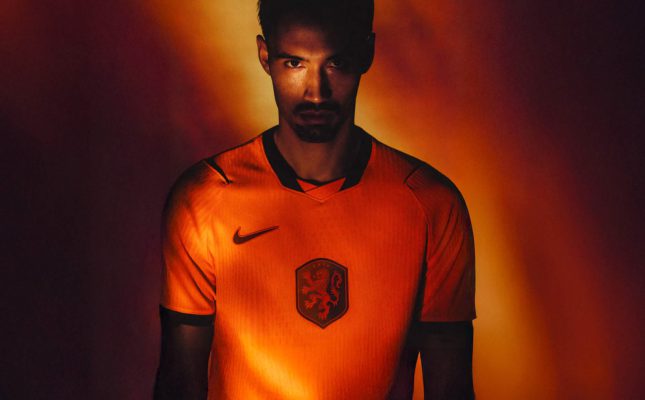
Just below that elite tier lies a group of contenders who sense opportunity in the new landscape. For Dutch supporters, there is cautious optimism surrounding Netherlands national football team as they head into the expanded tournament. Drawn into a competitive but navigable group, Oranje will feel they have both the quality and tournament experience to progress comfortably into the knockout rounds. Much will depend on whether this current generation can translate technical ability into consistency on the biggest stage, something that has eluded them in recent tournaments. With a blend of emerging talent and established internationals, the Netherlands are not quite among the outright favourites, but very much part of that dangerous second tier capable of making a deep run if momentum builds at the right time.
If the favourites bring familiarity, the expanded tournament ensures a wealth of fresh stories. One of the most compelling narratives of qualification comes from the Caribbean, where Curaçao national football team have emerged as a genuine Cinderella story. Their qualification marks a historic moment not just for the island but for the wider Dutch football diaspora, underlining the global reach of the game. Close behind them, Suriname national football team narrowly missed out, continuing their frustrating pattern of near-breakthroughs despite an increasingly talented player pool with European connections. Curaçao’s presence adds a fresh storyline to the tournament, one that will resonate strongly with Dutch-based fans who have followed the team’s steady rise over recent years.
Elsewhere, the tournament field reflects the growing competitiveness of regions once considered peripheral. African and Asian nations arrive with greater confidence and stronger infrastructure than in previous cycles, while host nations will look to capitalise on familiar surroundings and home support spread across an entire continent. The United States, in particular, will view this as an opportunity to showcase both its footballing progress and its capacity to stage global sporting events at scale, while Canada and Mexico bring their own distinct football cultures into the mix.
The logistical reality of a North American World Cup will also shape the experience for fans watching from Europe. With matches spread across multiple time zones, kick-off times will vary widely, often pushing late into the evening or deep into the night for viewers in the Netherlands. While this is not unfamiliar territory, the density of the schedule and the sheer number of matches will test even the most dedicated supporters. The trade-off, of course, is access: more games, more storylines and more opportunities to dip into the tournament at almost any hour of the day.
For those who did not win the lottery or take a second mortgage to attend in person, the experience back home in the Netherlands will still be rich. Thanks to the country’s strong broadcasting landscape, with national channels readily available in standard cable packages, supporters can follow virtually every match live, even if some North American kick-off times will stretch well into the late hours. To enhance the atmosphere, many fans will turn to Voetbalshop.nl for shirts and scarves, while supermarkets are certain to roll out their familiar World Cup assortments of themed snacks and drinks. One small cultural footnote may raise a smile: with Italy national football team absent once again, pizza might not be the obvious go-to choice for matchday fare this summer.
Ultimately, the 2026 World Cup stands as both a celebration and an experiment. It celebrates the expansion of football into new territories, the emergence of new nations and the enduring appeal of the game’s greatest stage. At the same time, it tests the limits of scale, asking whether more truly means better. What is certain is that the tournament will feel different: broader, longer and more inclusive, yet still anchored by the same fundamental drama that has always defined the World Cup. For six weeks in the summer of 2026, the world will once again revolve around football—only this time, more of that world than ever before will be involved.
Written by John Mahnen