
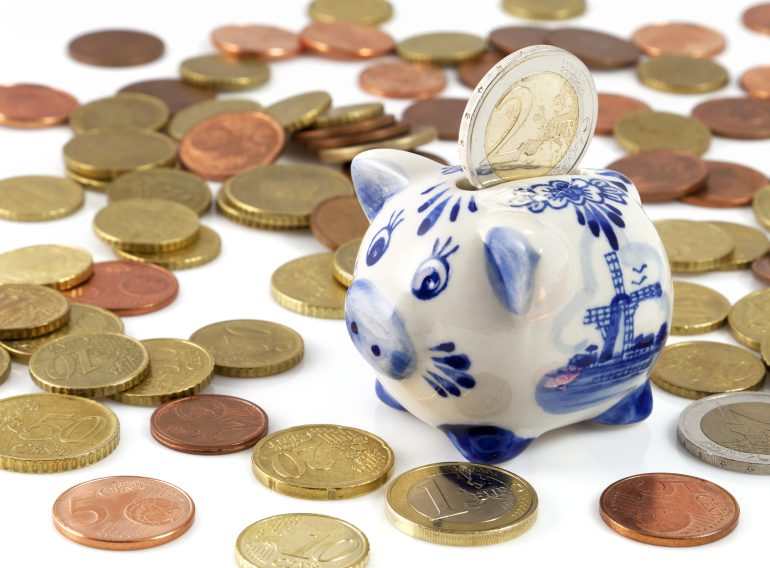
The Dutch are famous for many things: cycling everywhere, complaining about the weather, and having a seemingly supernatural ability to plan their calendars months in advance. Saving money may well be another one of their superpowers.
Dutch households have been putting more money aside in recent years, and the numbers are striking. By May 2026, they collectively held around €550 billion in savings, up more than 7 per cent from a year earlier. Add the money sitting in current accounts and the total rises to more than €664 billion.
But why do the Dutch save so much – and where does all that money go?
Part of the answer is simply that saving provides something that spending cannot: a sense of security. And there is plenty to feel uncertain about. Inflation, energy prices, geopolitical tensions and concerns about the economy have encouraged households to keep a little more money within reach. De Nederlandsche Bank (DNB) has similarly noted that inflation can make households more cautious about their future purchasing power.
Aggie van Huisseling, an economist at ABN Amro bank, says: ‘People may have got used to saving more during the pandemic,’ explaining the persistence of higher saving levels. The pandemic forced people to spend less, but the habit of putting money aside appears to have survived long after restaurants, holidays and shops reopened.
There is also a very practical Dutch reason for saving: the future tends to come with a price tag. A house deposit, a new car, university costs, children, home renovations or simply the inevitable washing machine breakdown all require money. Nibud, the National Institute for Family Finance Information, recommends building a personal financial buffer for precisely these unexpected expenses.
Housing is particularly important. The Netherlands has a long tradition of home ownership, but buying a house requires substantial amounts of money beyond the mortgage itself. Dutch households also increasingly save to pay off their mortgages. According to the Netherlands Bureau for Economic Policy Analysis (CPB), stricter mortgage rules have contributed to a long-term increase in mortgage repayments. In other words, saving in the Netherlands does not necessarily mean putting cash into a piggy bank. Paying off debts can also count as saving.
And while the stereotype might suggest that Dutch savers simply leave their money untouched in a bank account, there is more variety than that. The overwhelming preference remains the traditional savings account. In May 2026, around €461 billion was held in readily accessible savings accounts, compared with about €90 billion in fixed-term deposits. The preference for easy access makes sense: Dutch savers generally want their money to be available when the boiler breaks, the car needs repairing or an unexpectedly expensive bill arrives.
Higher interest rates have also made saving more attractive. After years of exceptionally low rates, the return on savings rose significantly from 2022 onwards. DNB notes that Dutch households responded by moving money from current accounts into savings accounts to take advantage of the higher interest.
Some Dutch households, meanwhile, are moving beyond saving into investing. At the end of the first quarter of 2026, households collectively held around €207.6 billion in shares, investment funds and bonds, according to DNB. That is still considerably less than the money sitting in ordinary savings accounts, but investing is becoming an increasingly visible part of household wealth-building. However, average savings can be misleading because wealth is unevenly distributed. The average Dutch household had around €54,700 in bank and savings accounts in 2024, but the median household had just €21,500. One in five households had less than €1,000 saved.
So perhaps the real Dutch saving habit is not about being wealthy – it is about being prepared. For some, that means hundreds of thousands of euros quietly accumulating in the bank. For others, it might mean setting aside €50 every month. The principle is the same: spend what you need, enjoy what you can – but keep something back for tomorrow.
Written by Priyanka Sharma