
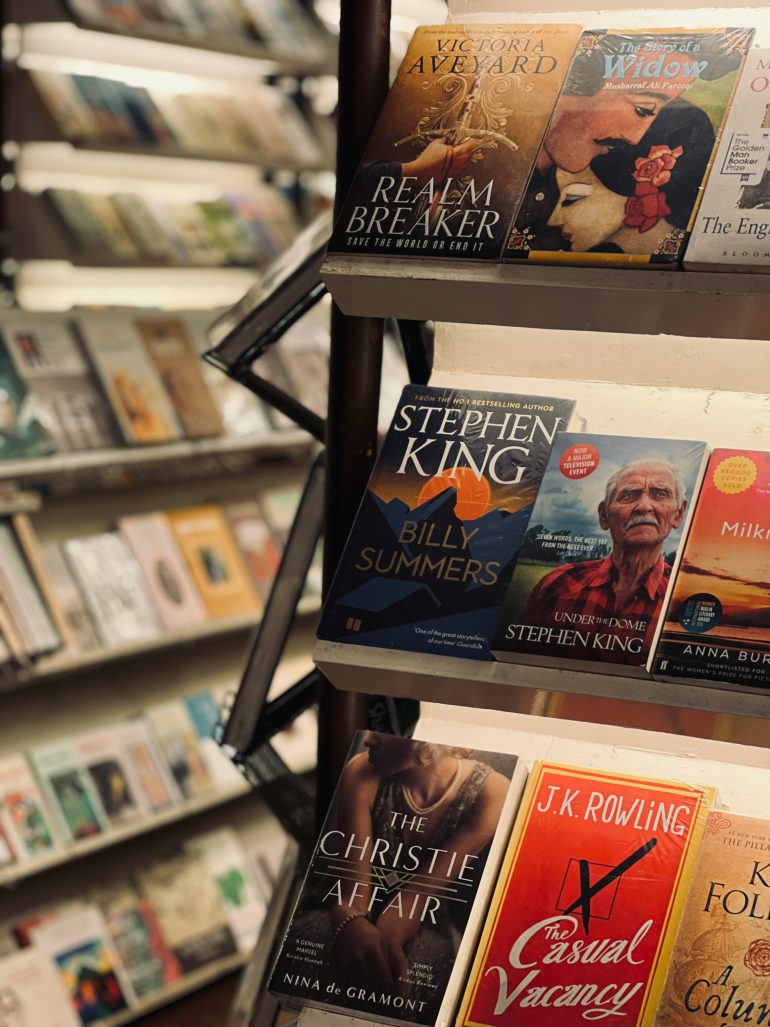
English-language books are increasingly popular in the Netherlands, especially among younger readers and particularly in the genres of fiction and children’s literature. KVB Boekwerk views this trend – influenced mainly by social media such as BookTok, as well as films and series – as a lasting shift.
According to KVB Boekwerk, the platform that monitors the Dutch book market, Dutch readers, especially those under the age of 35, are increasingly opting for English-language books. Its research indicates that in 2024, these books represented over 90% of all other-language printed books sold in the country, becoming a significant part of the Dutch book market.
English books are now prominently featured in bookstores, online, on social media, and at events like Young Adult Literature Festival Utrecht and ‘romantasy’ fairs. This trend has also led to the establishment of more specialised English-language bookstores and sections, with owners targeting the BookTok audience and hosting special events.
Journey of discovery
The latest KVB Boekwerk study shows that young people in the Netherlands choose English-language books often because they are comfortable reading it, since they use the language for their studies and in their free time, or because they prefer reading a book in its original language.
Diederik Oostdijk, Professor of English Literature at Vrije Universiteit Amsterdam, tells NOS that he sees young Dutch people, who already have a good command of English, enjoying the journey of discovery that comes with reading in another language. He said: ‘It is fascinating for them to do this in a language that differs from that of their parents or their immediate environment. It enhances their sense of discovery.’
Social media’s power
The research further revealed that it is primarily social media, and BookTok in particular, that prompt younger generations to buy English-language books. Omroep Delft reports that Marleen van der Wal, owner of The Paperback, an English-language bookstore in Delft, is one of the booksellers who has noticed that social media often generates extra customers almost immediately; she describes the influx as surprising and incredible. ‘There was a real need for an English bookstore in Delft,’ she adds.
Film and TV adaptations based on books, such as Game of Thrones and The Lord of the Rings, also play a role in this preference. Sanne Muijser, director of the Royal Booksellers Association, noted that people prefer reading these books in English because it brings them closest to the original.
English atmosphere
According to NOS, an increasing number of bookstores selling English-language books is embracing innovation by offering a social meeting place, often including a café area. ‘British bookstores often have that kind of atmosphere,’ Anna Bergwerff, owner of a bookstore in Amersfoort, tells NOS: ‘That extra element really works; I’m already seeing the benefits.’
In Tilburg, bookstore owners Daan Severijns and Ana Maria Vallejo Perez tell NOS that they offer refreshments and activities such as book clubs and game nights. ‘We’re more of a community, especially for the international crowd. People are looking for a quiet space and offline social interaction,’ said Severijns.
Perspectives
KVB Boekwerk has indicated there are some concerns within the Dutch book sector that the growing demand for English-language books could harm the Dutch book industry and threaten Dutch literature and language.
However, it also notes that buyers of English-language books often purchase Dutch-language titles as well, indicating a broadening of reading habits rather than a shift away from Dutch works. All in all, the monitor suggests that, provided a balance is struck, the trend could offer opportunities for a resilient sector that supports both languages.
The Collective Promotion of the Dutch Book (CPNB) Foundation also sees no reason for pessimism: ‘It encourages young people to read, and hopefully, that will make them more inclined to read Dutch-language books later on.’
Written by Femke van Iperen