
From royal history and world-famous art to cutting-edge innovation, Delft is one of the Netherlands’ most captivating cities.
There are plenty of beautiful cities in the Netherlands, but few manage to combine history, culture and innovation quite as effortlessly as Delft. Tucked between Rotterdam and The Hague, this compact canal city is often overshadowed by its larger neighbours. Yet those who take the time to explore quickly discover one of the country’s best-kept secrets.
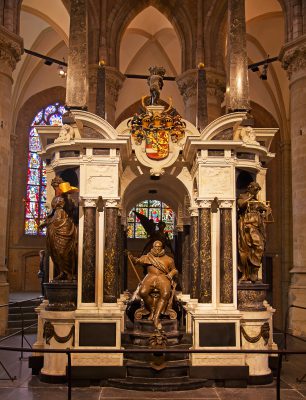
Delft is famous around the world for its distinctive blue and white pottery, but that’s only the beginning of its story. It is the city of Johannes Vermeer, the resting place of William of Orange and home to one of Europe’s leading technical universities. Early modern streets, lively cafés, artisan workshops and groundbreaking research all exist side by side, creating a city that feels both timeless and remarkably forward-looking.
The beauty of Delft is that it never tries too hard to impress. It simply does.
Where the Netherlands took shape
Delft occupies a unique place in Dutch history. In 1572, William of Orange chose the city as his residence during the revolt against Spanish rule. From here he led the struggle that would eventually give birth to the independent Dutch Republic and lay the foundations for many of the freedoms that define the Netherlands today.
That history is still visible wherever you walk. Elegant canals, centuries-old merchant houses and beautifully preserved streets create the feeling of stepping into a living history book rather than an open-air museum. Unlike many European cities, Delft has managed to preserve its intimate scale, making it wonderfully easy to explore on foot.
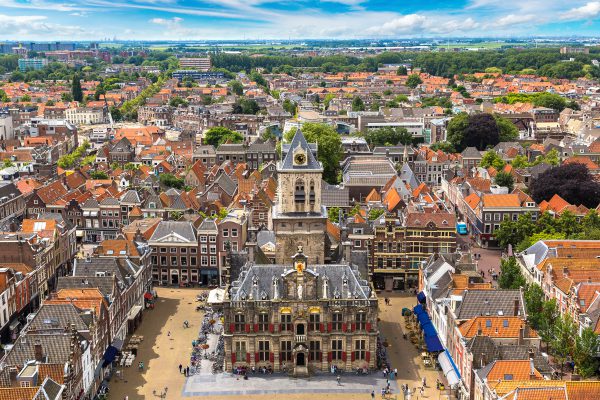
At the heart of the city lies the Markt, one of the largest and most impressive market squares in the Netherlands. Dominated by the magnificent Nieuwe Kerk (New Church) and the Renaissance-style City Hall, it has been the centre of civic life for more than eight centuries. On market days, colourful stalls fill the square with flowers, local cheeses, fresh produce and Dutch specialities, while cafés spill onto sunny patios where locals and visitors happily linger for hours.
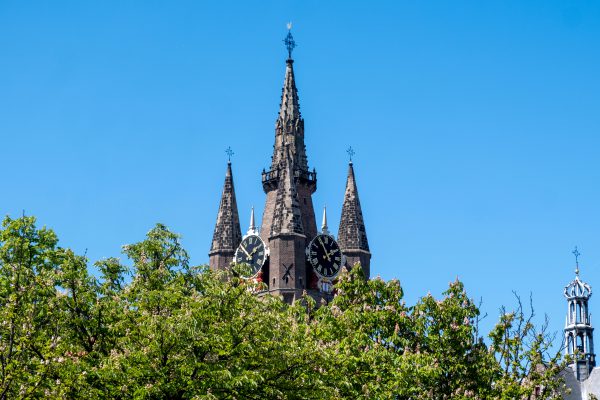
Just a short stroll away stands the Oude Kerk, affectionately known as Scheve Jan (Crooked John) because of its noticeably leaning tower. Built on unstable ground beside a canal, it leans even more dramatically than the famous Tower of Pisa. Inside rest some of Delft’s greatest citizens, including painter Johannes Vermeer and scientist Antoni van Leeuwenhoek, whose pioneering work with microscopes transformed our understanding of the natural world.
The city of Vermeer and Delft Blue
Art lovers know Delft as the city of Johannes Vermeer, whose masterful use of light made everyday life appear extraordinary. Although only around 35 of his paintings survive, his legacy continues to define the city’s artistic identity. Walking through Delft’s quiet streets, it’s easy to imagine the scenes that inspired masterpieces such as Girl with a Pearl Earring and View of Delft.
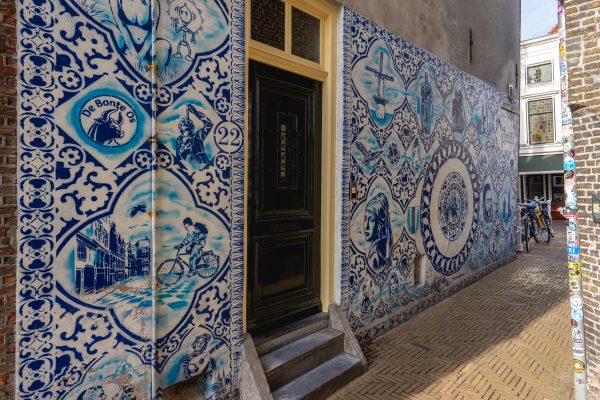
The city’s other great artistic treasure is Delft Blue. Since the seventeenth century, local craftsmen have perfected the art of hand-painted blue and white ceramics inspired by Chinese porcelain. Today this tradition is still very much alive. At Royal Delft, the last remaining factory from among the original Delftware manufacturers, visitors can watch artisans decorate each piece entirely by hand using techniques passed down through generations. Every brushstroke reflects remarkable patience and craftsmanship, making each object unique. Several smaller studios throughout the city also welcome visitors, with demonstrations and workshops offering the chance to paint your own Delft Blue tile.
A city that never stopped innovating
While Delft celebrates its past, it is equally committed to the future. Just beyond the historic centre lies TU Delft, one of Europe’s leading universities for science, engineering and technology. Researchers here are developing everything from sustainable aviation and robotics to renewable energy and quantum technology. More than 275 international companies have established themselves around the university, turning Delft into one of the Netherlands’ most important innovation hubs.
What makes this so remarkable is the contrast. Within a fifteen-minute walk you can move from medieval canals and churches to laboratories where tomorrow’s technologies are taking shape. Few places illustrate the Dutch talent for combining heritage and innovation quite so naturally. Hence the city’s motto: making history.
Slow travel at its best
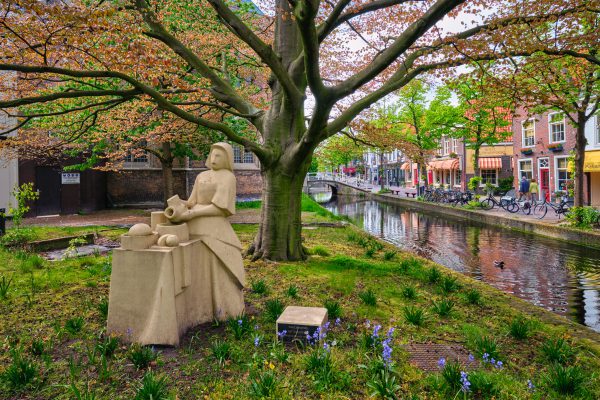
Perhaps Delft’s greatest attraction isn’t a single landmark but its atmosphere. This is a city best explored without a strict itinerary. Wander along tree-lined canals, cross charming stone bridges, browse independent boutiques and art galleries, or simply settle at a café while watching boats glide quietly through the waterways.
The Beestenmarkt, once a livestock market, has become one of Delft’s liveliest squares, shaded by mature trees and lined with cafés and restaurants. Nearby Doelenplein offers a more intimate setting, while Brouwplein, right next to the Old Church, reflects the city’s renewed passion for locally brewed beer.
Beer has deeper roots here than many visitors realise. Between the fifteenth and seventeenth centuries, Delft was one of the largest brewing centres in the Netherlands. That tradition is enjoying a renaissance, with local breweries producing craft beers that celebrate the city’s rich brewing heritage. At Delft Brouwhuis, visitors can even enjoy a locally brewed beer on top of a remarkably well-preserved medieval beer cellar discovered during construction.
Beyond the postcards
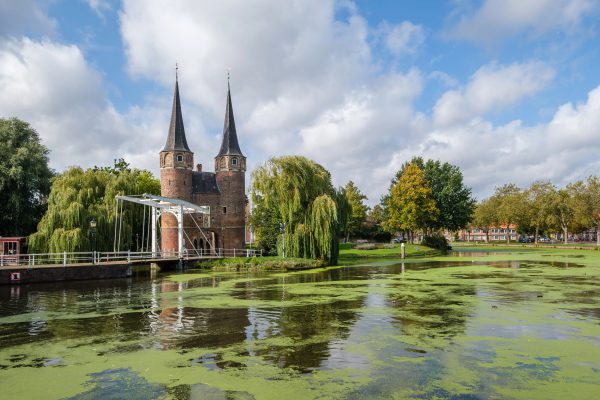
Some of Delft’s most memorable sights lie just beyond the main tourist route. The Oostpoort, dating from around 1400, is the city’s only surviving medieval gate. Reflected in the surrounding canals, its twin towers create one of Delft’s most photogenic views and offer a glimpse into the city’s fortified past.
On the other side of the city centre is Molen de Roos, the last remaining windmill of the eighteen that once stood within Delft’s city walls. Still powered by the wind, it produces organic flour that is used to bake fresh bread sold on site. Visitors can climb the mill, learn about traditional milling techniques and enjoy homemade treats from the shop, baked with grain milled on site.
For those wanting to escape the bustle for a while, on the edge of the city is Delftse Hout, a large green area with excellent walking and cycling routes, as well as a petting zoo and a lake popular for swimming. All this proves that Delft is as much about relaxation as it is about history.
A city worth savouring
No visit is complete without enjoying Delft’s culinary side. Pick up a freshly prepared sandwich from one of the city’s artisan bakeries – the best is Diamanten Ring – and enjoy lunch beside the canal, or indulge in the famous Delftse Bol, a generously filled chocolate-covered pastry that has become a local favourite.
The city’s restaurants reflect its international character, with everything from traditional Dutch cuisine to contemporary European and Asian flavours. Thanks to the university and its international community, Delft offers a surprisingly diverse food scene for a city of its size. Try Ramen Nikkou, Indian food at Kokam, Redjeki for Indonesian treats, or Chinese restaurant Lychee.
Small city, lasting impression
Many travellers arrive in Delft expecting an attractive historic town. They leave having discovered something far richer. This is where the story of the Netherlands took shape, where Vermeer captured light like no one before him, where scientists changed the world and where engineers continue to shape the future. It is a city that values craftsmanship as much as creativity, history as much as innovation.
Compact enough to explore in a day yet rewarding enough to tempt you back again, Delft offers a side of the Netherlands that feels authentic, welcoming and wonderfully unhurried.
Some cities ask to be admired. Delft simply invites you to slow down, look a little closer and enjoy every moment.