
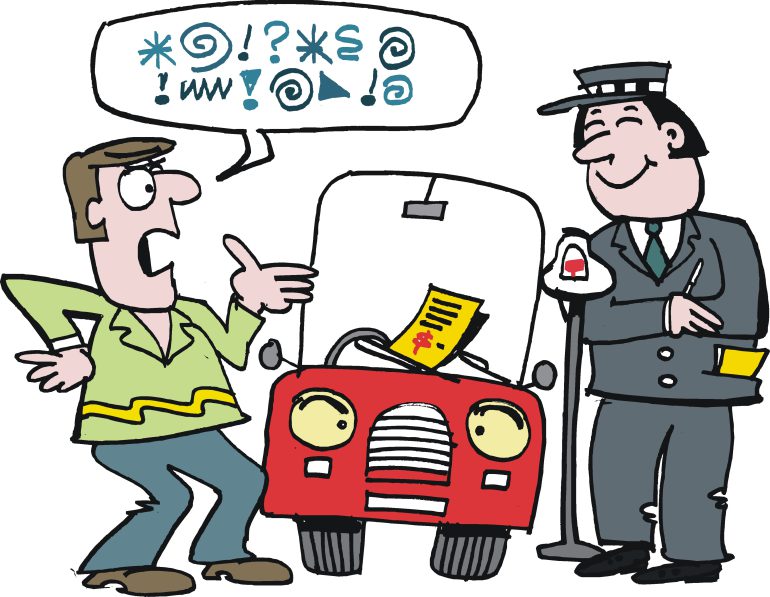
Across history governments have used varied and sometimes strange methods of collecting revenue from their citizens, whether that be taxes or fines. In 18th-century Russia, Tsar Peter the Great introduced a tax on men with beards, in 2011 the Romanian government classified ‘witches’ as official professions to force them to pay income tax, and in 2025 France introduced a €135 fine for smoking on ski slopes. With Europe in the grip of various economic crises, governments everywhere are desperately searching for unorthodox methods of stacking their coffers.
Which brings us to recent comments by Albert Hazelhoff, the outgoing director of Dutch Central Judicial Collection Agency (CJIB), about the excessive nature of Dutch traffic fines. The CJIB is the agency responsible for collecting fines for offences such as speeding or using a phone while driving. In an interview with newspaper Leeuwarder Courant, Hazelhoff, who is stepping down after 35 years at the agency, advocated for a significant reduction in penalties when fines are not paid straight away. He argued that the current system amounts to a ‘profit model’ for the government.
The Dutch traffic fine system is a tightly structured but often confusing mix of administrative procedures and escalating penalties. Most violations — from minor speeding to illegal parking — are handled under the Wet Mulder administrative regime, meaning the CJIB issues the fine directly, with a compulsory €9 administration fee added to every offence. The tariff structure varies by location and severity: the same speeding violation can cost different amounts in a built-up area, on a provincial road or on the motorway.
What makes the system particularly punishing is the way unpaid fines snowball. If a driver misses the initial payment deadline, the CJIB automatically increases the amount by 50%. If a second reminder is required, that already-inflated total is doubled, meaning a relatively small fine can triple in size. These percentage-based surcharges operate more like interest penalties than administrative fees, and for many drivers they form the most opaque and burdensome part of the enforcement system.
These surcharges stand in sharp contrast to the fines levied within the criminal justice system. As an example, the fine for using a phone while driving is €430, whereas the standard fine for assault without causing injury is €400. And where traffic surcharges rise by 50% and then 100%, criminal fines increase far more modestly: a first reminder adds €20, and a second another 20% — after which the amount no longer increases. As Hazelhoff suggested in his interview, ‘it would be good if the two fine systems were more closely aligned. From both a debt perspective and for uniformity, we want a reduction in the increase. Or just one reminder with an increase instead of the current two.’
However, no changes to the traffic fine system will be forthcoming, at least in 2026. In an interview with broadcaster NOS, caretaker Justice and Security Minister Foort van Oosten bluntly stated that ‘the easiest and best way for everyone to avoid a hefty fine is to simply obey the traffic rules. That way, you won’t get a ticket, and everyone will enjoy driving.’ While he acknowledged that fines are ‘quite high’, there would be no reduction because ‘the fines fund important matters within the justice and security system, such as the police and fire departments’.
So if this Christmas you’re thinking of driving to do some shopping, or see the family, perhaps take the bus instead.
Written by James Turrell