
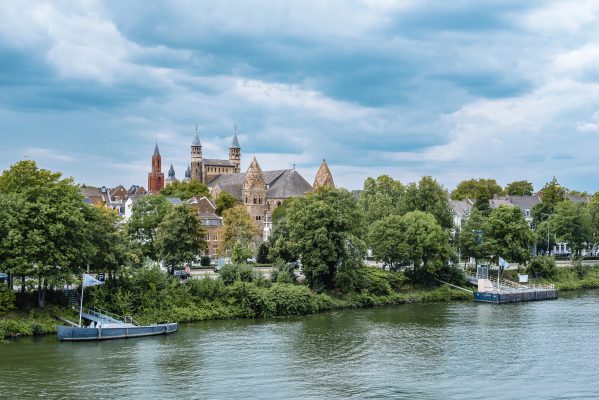
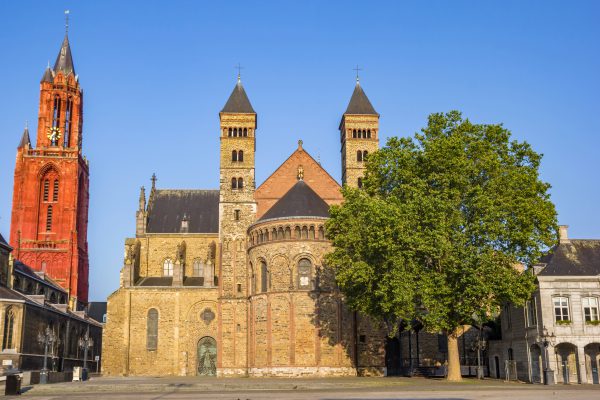

Tucked into the rolling green hills of the southernmost part of the Netherlands, Maastricht is a city that feels both distinctly Dutch and unmistakably European. With Roman roots, medieval charm, modern design and a cosmopolitan community, it offers an atmosphere unlike anywhere else in the country. For expats looking for a perfect getaway – or even a place to call home – Maastricht is a city that blends heritage, culture and high quality of life with effortless style.
From the Romans to today
Long before the cafés, boutiques and terraces filled the city’s streets, Maastricht lay beneath an ancient sea. Fossils dating back 70 million years have been found in the region, but Maastricht’s real story begins with the Romans, who settled here along the Via Belgica, the trade route linking Boulogne-sur-Mer and Cologne.
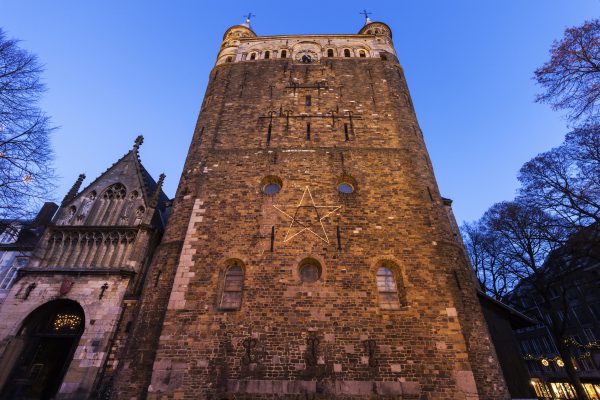
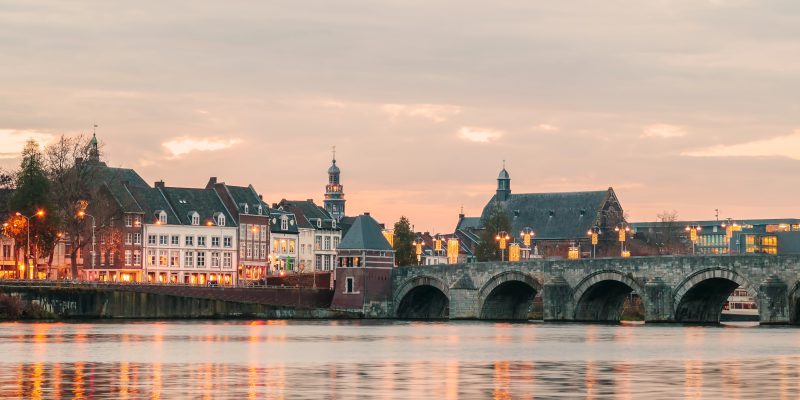
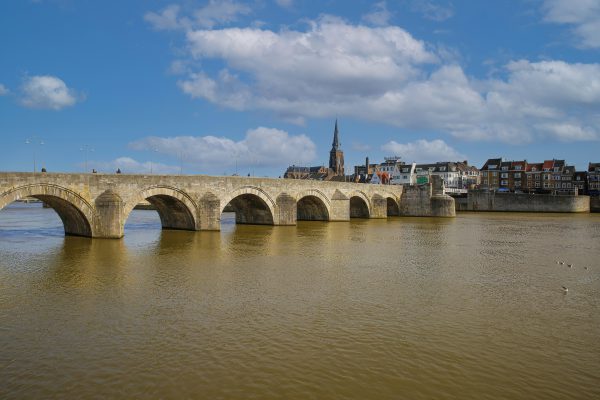
When the river Maas proved tricky to cross, they built a bridge and established a settlement called Mosa Traiectum – ‘crossing at the Meuse’. This crossing became so important that the modern city still carries its name. Evidence of this Roman past is easy to find today: the underground museum in the Derlon Hotel displays a Roman sanctuary and square, while enormous stone blocks from the Roman fort were later reused in the Onze-Lieve Vrouwebasiliek (Basilica of Our Lady).
By the Middle Ages, Maastricht had grown into a strategic, religious and later industrial hub. Towers, city walls and gates from this era still stand proudly; the Helpoort remains the oldest surviving city gate in the Netherlands. In the centuries that followed, Maastricht evolved into a vibrant university city and cultural destination, but it never lost the historic charm that gives it such depth and personality.
A city that lives the good life
Maastricht is widely known in the Netherlands for its warmth, elegance and lavish lifestyle – a southern approach to living that emphasizes enjoyment, great food and taking your time. On any café terrace, you’ll hear Dutch, French, German and English floating through the air. Locals linger over wine at street cafés, families stroll along the riverside and students cycle between university buildings housed in former monasteries.
The city’s cultural scene is exceptional. Maastricht hosts international events like TEFAF, one of the world’s most prestigious art fairs, along with the Dutch Dance Days and Museum Night Maastricht. The Bonnefanten Museum, with its striking architecture, blends medieval art with cutting-edge contemporary exhibitions. And in the revitalized Sphinx Quarter, old factories now house design studios, music stages such as Muziekgieterij, and the atmospheric Lumière Cinema for arthouse films and documentaries.
Creativity is woven into Maastricht’s fabric. The city is home to artisans, designers, makers and a thriving creative industry shaped by centuries of craftsmanship, from ceramics to fashion and jewellery design. Walk through the city and you’ll spot local makers’ studios, one-of-a-kind boutiques and independent galleries showcasing Maastricht’s inventive spirit.
Explore the city’s distinct neighbourhoods
Maastricht is not one city – it’s many small worlds stitched together. Each district carries its own feel, rhythm and charm. Together they form an urban landscape that is diverse and walkable.
- Wyck
If you arrive by train, Wyck (pronounced “week”) is your first glimpse of Maastricht’s charm. It’s one of the city’s most beloved districts, filled with historic townhouses, vintage shops, artisan boutiques, local galleries and inviting cafés and restaurants. Wyck feels vibrant, stylish, and unmistakably welcoming – a perfect introduction to the city’s blend of history and creativity.
- Céramique
Follow the river south and you’ll reach Céramique, a modern district of striking architecture, cultural institutions and spacious streets. Here you’ll find Bonnefanten Museum, the city library, riverside walkways and some of Maastricht’s most modern residences. Céramique is clean, contemporary and ideal for anyone who loves design and urban tranquillity.
- Sphinxkwartier
Once an industrial area dominated by factories, Sphinx Quarter has become Maastricht’s innovation hub. It now houses hotels, creative workspaces, design stores, the Lumière Cinema and the music venue Muziekgieterij. The atmospheric old harbour, ’t Bassin, adds extra charm to this youthful and dynamic area.
- The historic inner city
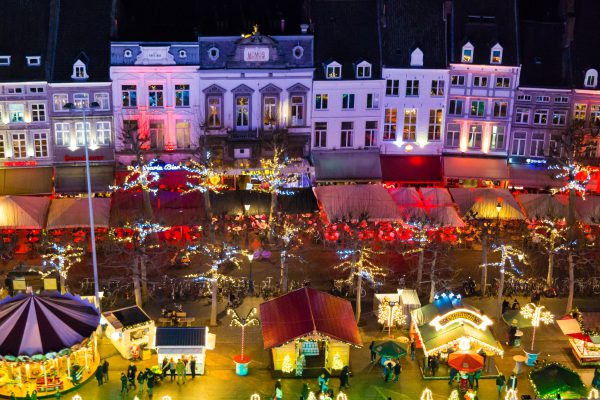
The heart of Maastricht lies between the St. Servaasbrug, the Vrijthof and the Markt. This is where centuries-old buildings meet modern boutiques and lively squares. With shopping malls like Entre Deux and Mosae Forum, plus countless independent shops, the city centre is ideal for strolling, shopping and enjoying the atmosphere of one of the Netherlands’ oldest urban areas.
- Jekerkwartier
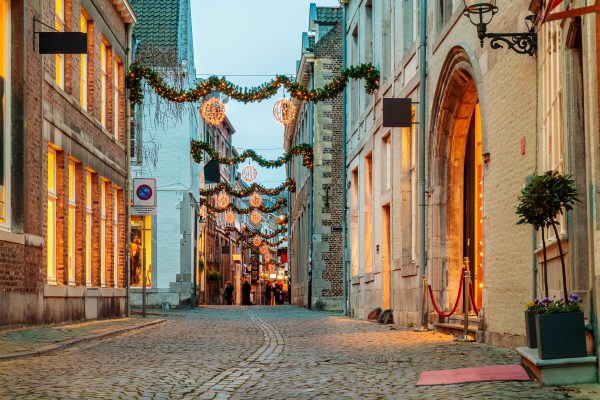
Often compared to a French village, Jeker Quarter is picturesque and full of charm: narrow cobbled lanes, medieval walls, hidden bakeries, bubbling student cafés, terraces in tiny squares and live music drifting through the air. It’s artistic, cozy and full of personality.
- Stokstraatkwartier
Chic and elegant, Stokstraat Quarter is Maastricht at its most refined. Its cobblestone streets are lined with luxury boutiques, stylish cafés and beautifully dressed locals. Despite its polish, the area feels intimate and is ideal for wandering.
- Statenkwartier
Authentically Maastricht, Staten Quarter mixes historic architecture with student life, local cafés and cultural diversity. It’s lively without being hectic, and its blend of residents gives it a warm, neighbourhood feel.
- Sint Pieter
At the southern edge of the city lies the green, peaceful district of Sint Pieter, framed by the limestone plateau of the Sint-Pietersberg. It feels almost like a village, yet it’s just minutes from the city centre. With nature trails, scenic views and quiet residential streets, it’s one of Maastricht’s most desirable living areas.
Green living and nature on your doorstep
Maastricht is full of parks, public gardens, and natural escapes. Stadspark stretches along the old city walls, while the Groene Loper – a leafy boulevard built atop an underground motorway tunnel – is a symbol of the city’s ‘from grey to green’ transformation. The project has improved air quality, reduced traffic and made cycling and walking the easiest, most pleasant ways to move through the city.
Just beyond Maastricht lies the Meuse Valley, a region of vineyards and gentle hills. The area is famous for its winemaking, with estates such as Apostelhoeve, St. Martinus and Wijngoed Thorn gaining national and international recognition. The best part? You can cycle from Maastricht to wine country in under 30 minutes.
An international city with a European spirit
Maastricht is arguably the most international university city in the Netherlands. Around half of the students at Maastricht University come from abroad, and English is the primary language of instruction in many faculties. This creates a vibrant, diverse environment that spills out into the city’s cafés, streets and festivals.
The city is also deeply connected to European history. The Treaty of Maastricht, signed here in 1992, laid the foundation for the European Union and the introduction of the euro. Since then, Maastricht has remained home to EU-related institutions, global companies and international organizations, making it an appealing base for expats working in the Netherlands or the cross-border region.
Why Maastricht is worth visiting – or moving to
So what makes Maastricht irresistible?
- It offers the charm of a historic European city in a manageable, welcoming size.
- It has a vibrant cultural scene, from world-class museums to festivals, theatre and live music.
- It’s international, open-minded and easy to navigate for English speakers.
- It’s surrounded by nature, from riverside parks to hills and vineyards.
- It’s well connected, just 2.5 hours from Amsterdam and close to Belgium and Germany.
- It takes lifestyle seriously, with great food, warm hospitality and countless outdoor patios to enjoy a drink.
For visitors, Maastricht is especially delightful during the week, when the crowds thin out and the city feels even more relaxed. Hotels are often more affordable from Sunday to Thursday, and you’ll share the streets mostly with locals rather than weekend tourists.
Whether you’re an expat living in the Netherlands, a traveller seeking a new city break, or someone considering a move, Maastricht is a place that welcomes you warmly, surprises you constantly and invites you to stay longer than planned.
Beautiful, historic, creative and international: Maastricht is the Netherlands’ southern gem just waiting to be discovered.