
![Starlit Night (Miyajima)
Hoshizukiyo [Miyajima] 星月夜 [宮島]
Willem-Jan van Elk Collection](https://www.hollandtimes.nl/wp-content/uploads/2025/12/4-272x400.jpg)
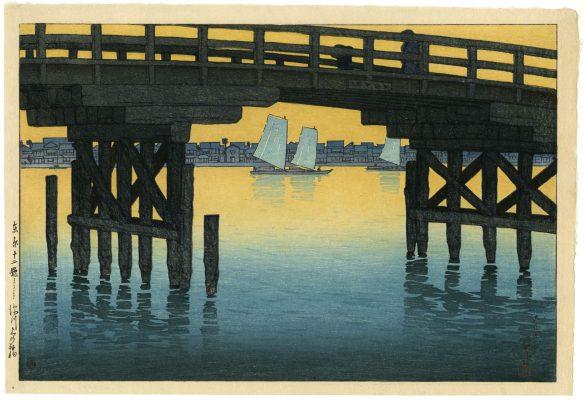
From 19 December 2025 to 15 March 2026, Japan Museum SieboldHuis will present the captivating exhibition Kawase Hasui. Capturing the Soul of Japan. The landscapes of Hasui (1883-1957), a master of printmaking, portray the world of rural life, tradition and quiet beauty. Featuring more than 100 exquisite prints, the exhibition invites visitors to journey through 20th-century Japan. Amid a country undergoing rapid transformation, Hasui chose to highlight tranquillity and harmony in his serene landscapes and village scenes. Alongside rare early works, the selection also includes illustrations created for menus, magazines, posters and postcards. With this exhibition, Japan Museum SieboldHuis proudly presents the very first Hasui exhibition in Europe.
Shin Hanga: the rebirth of Japanese printmaking
At the beginning of the 20th century, traditional Japanese printmaking (ukiyo-e) appeared to be in decline. Photography and lithography were gaining popularity, and classical techniques were at risk of being forgotten. Thanks to the efforts of the publisher Watanabe Shōzaburō, printmaking was revived in a new, contemporary form: Shin Hanga – literally ‘new prints’. In this movement, artists, block carvers, printers and publishers worked closely together to create high-quality prints that blended traditional methods with modern sensibilities.
Master of landscapes
Kawase Hasui (1883-1957) began his artistic career relatively late, producing his first prints at the age of 35. His landscapes were the result of extensive sketching trips across Japan. While his predecessors often focused on famous landmarks, Hasui frequently chose intimate, serene scenes, revealing lesser-known locations that he believed captured the true essence of Japan. This approach proved highly successful and his prints were eagerly collected both in Japan and the United States.
Vanished works
Hasui worked during a time of great turmoil and change, which certainly influenced his career. When Tokyo was struck by a devastating earthquake on 1 September 1923, the premises of the publisher Watanabe were destroyed, along with all the woodblocks and print stocks that had been produced by Hasui up to that point. Hasui’s sketchbooks were also lost. As a result, prints created before the earthquake are extremely rare. This exhibition offers the public a unique opportunity to admire more than thirty of Hasui’s early works.
Rebuilding from ruins
Both Hasui and Watanabe survived the bombing of Tokyo during World War II, and this time their stock of prints was spared. Amid the ruins of the devastated city, they quickly resumed their work. Despite the preceding years of war, demand for Japanese prints in the United States remained high, largely thanks to American soldiers stationed in Japan. Watanabe capitalised on this opportunity, and soon large quantities of works were being exported.
19 December 2025 – 15 March 2026