
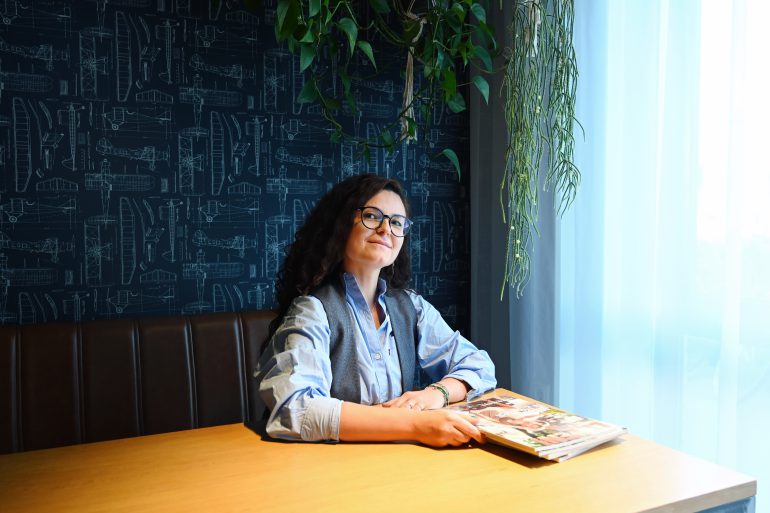
My name is Ana Maria Mitrofan, and I am originally from Romania. I’ve been living in the Netherlands for more than sixteen years. Romania will always be my first home, while the Netherlands is my adoptive one. For me, Romania is about roots, the sea, mountains and vivid contrasts, where people connect easily and life feels spontaneous. It’s very different from the calm structure of the Netherlands, yet both have shaped me in beautiful ways.
Where do you live in the Netherlands? What is one of your favourite things about where you live?
I live in Rijswijk, very close to Delft and The Hague. I love that it feels like a peaceful in-between, small enough to breathe, yet big enough and conveniently located to stay connected. My favourite thing is walking along the canals and observing nature, the insects, the reflections in the water, the ever-changing sky. Especially early in the morning or late in the evening, when everything slows down. It’s the kind of calm that quietly resets you.
What’s your job or business?
I’m an ICF-certified Transformational Coach, Emotional Counsellor and Somatic Alignment Practitioner. I help people who feel overwhelmed, stuck or disconnected find their way back to themselves, to their body, emotions and creative flow.
My work weaves psychology (which I’m currently studying), somatics and creativity. I often use LEGO Serious Play, role play, metaphoric cards and art-inspired tools to make inner work tactile and alive. I also facilitate creative workshops for individuals and teams, bringing reflection, play and connection into learning and personal growth.
Before this path, I spent over fifteen years as a researcher, naval architect and manager in the maritime field, exploring complex floating structures of a different kind. Today, I help people rebuild their inner architecture through my practice, Waves & Mosaics, and my creative brand, Simply Soul Architect.
When was your first time in the Netherlands? What were your first impressions or what was special about that first trip?
My first visit was in 2010. I remember being amazed by the sense of order and loved seeing all the bikes, the vivid green, the water and the urban design. Everything seemed to flow, literally. It felt like a country designed for both freedom and structure, which is probably why I came back to stay, alongside my passion at that time for the maritime world.
What is the nicest thing about the Netherlands? How does this compare to your country?
I love how things work here, from public transport to administrative appointments. There’s a sense of reliability and trust in the system. Coming from Romania, where things are more spontaneous, the Dutch structure feels grounding. Yet sometimes, I still miss the warmth and openness of spontaneous connections that come so naturally back in my first home.
Besides the weather, what is your biggest pet peeve about the Netherlands?
I don’t really have a problem with the weather anymore. I actually enjoy the summers here, especially compared to how they were fifteen years ago. If I had to name something, maybe it’s how long it takes to truly get close to people. The Dutch are kind and open, but deeper friendships grow slowly, like roots finding their way underground. It probably just takes time and a bit of patience. Coming from a culture where feelings and warmth are expressed more openly, it took time to adjust.
Do you have Dutch friends? How do you meet Dutch people?
Yes, a few. Mostly through local communities, networking events, volunteering, and other creative or expat circles. Attending events and collaborating on small projects has helped me meet people beyond casual conversations. I’ve also stayed in touch with a few former colleagues from my naval architecture years, which creates a nice bridge between my past and present worlds. And through my personal development journey, especially during my trainings and within volunteering communities, I’ve met some truly wonderful people, both Dutch and international, who have become meaningful connections over time.
What do you like about Dutch people? What don’t you like?
I appreciate their directness, although it took me a while to get used to it. There’s honesty in the way they communicate, which I’ve come to value. There’s also a certain informality in daily interactions that was surprising at first. In Romania, manners and small gestures are more emphasized, while here everything feels a bit more casual. But over time, I’ve learned to appreciate that casualness as part of the Dutch charm. I’ve come to see that every culture has its own beauty and its own imperfections, like everything in life. I try to take what resonates with me from each one and let that shape who I am becoming.
What’s your best advice for new expats to make friends?
Give it time, and stay curious and authentic. Don’t expect instant closeness. Do your part, show up, stay consistent and let things unfold naturally. Join activities or communities that genuinely interest you, whether it’s volunteering, creative circles, counselling or therapy groups, retreats, workshops, sports or local networking events. Shared experiences create connection much more easily than small talk. And most importantly, keep your heart open. The right people will find you when you show up as yourself.
Do you have a favourite restaurant in your city?
Delft is one of my favourite cities. I love many places there, but if I had to name one, it would be Kek. It’s warm, has good coffee and creative energy, and it’s also kid-friendly. I love the mix of plants and the gentle buzz of people working or chatting softly. It’s a small place that feels alive, yet calm at the same time.
I also love Paco Ciao in Leiden. It has a relaxed, bohemian atmosphere, good food, and a feeling that instantly puts you at ease. And in The Hague, Lavinia’s Cakes and Buttons is one of my favourite spots for something sweet. The atmosphere there is just magical, and the décor is pure art. Each of these places has its own charm, and they all make me slow down and enjoy the simple moments.
What’s your favourite Dutch store?
I love Dille & Kamille for its variety, simplicity and natural beauty, it feels relaxing just to walk through the aisles. But I’m also drawn to Delft Blue stores. There’s something timeless about the craftsmanship and the shades of blue. It reminds me of both art and heritage. Every piece feels like a small story captured in porcelain.
What do you like to do on the weekends?
Lately, because of my studies, I often need to study or travel, sometimes even during weekends. But when I have free time, weekends are my chance to slow down and reconnect. I love walking in nature, especially around Delft or by the sea. I spend time with my family, enjoy a good coffee, meet friends, or stay home being creative. Sometimes I wander through local markets, buy fresh flowers, or simply enjoy the small rituals of daily life, groceries, cooking or rearranging a cozy corner at home. Other times I join a workshop or an event, but often I just let the day unfold, and somehow, rest always finds its way in.
Who is your favourite Dutch historical, cultural or famous person?
Not a famous historical person, but I admire the work of contemporary artist Redmer Hoekstra. His drawings combine animals, objects and unexpected elements, like a bird with the body of a fish, or a creature made of instruments, inviting you to see the world through new eyes. His art reminds me that creativity is not only about beauty, but also about perception and the courage to look beyond the obvious.
I’ve also been deeply influenced by the research of Bessel van der Kolk, the Dutch-born psychiatrist, author and researcher internationally recognized for his work on trauma and the nervous system (The Body Keeps the Score). His work on the connection between body and mind has shaped the way many of us understand healing and embodiment today.
What would you recommend a visitor to do and see in your city and in general in the Netherlands?
In Delft, I’d say, take your time. Walk along the canals, explore the small streets and stop at the cozy cafés and restaurants. Visit the museums, admire the architecture and notice the beautiful and sometimes surprising details on the old buildings. You can often spot the Dutch lion carved into façades and gates, as a reminder of the country’s history and spirit. Wander through the street markets, or take a boat trip if you can. And don’t miss the student city energy: thousands of bicycles, laughter and movement. Delft is a place that reveals its beauty in small moments.
Beyond Delft, explore the smaller towns and nature areas like Leiden, Haarlem or the dunes by the sea. Venture into the countryside to see the wide fields, the Veluwe forests, or the quiet charm of Giethoorn, known as ‘little Venice’. The Netherlands is more than Amsterdam. It’s full of peaceful places.
What is your favourite Dutch food? And what Dutch food do you dislike?
I like erwtensoep, the traditional Dutch pea soup. I even make it myself during the colder months. It’s simple and nourishing. I also enjoy Dutch cheese and, from time to time, even fresh herring with onion. It’s such a typical Dutch experience (though it took me a bit of time to get there, haha). The one thing I never managed to like is drop, especially salty liquorice. I’ve tried a few times, but it’s definitely not for me.
Do you celebrate Dutch holidays? Which one is your favourite?
Yes, we do. Our favourite is Sinterklaas. Since we have a son, it’s a lovely celebration to share together, full of small surprises and excitement. It also feels familiar, as it’s very similar to our Saint Nicholas tradition back home in Romania. I love how both cultures keep that same sense of warmth, generosity and magic alive for children.
Best kept secret in your city?
In Rijswijk, I love walking through Rijswijkse Bos or Wilhelminapark. Both are peaceful and full of life, with trees, water, birds and that quiet feeling of space. They’re perfect places to slow down and breathe.
In Delft, I never get tired of the little streets, bridges and canals near Oostpoort. At sunset, the light on the water makes everything feel a bit magical.
If you want to see a place where nature meets human design, visit the Maeslantkering gates in Hoek van Holland. They are part of the Delta Works, a remarkable system built to protect the Netherlands from flooding. Watching these massive structures standing at the meeting point of sea and land feels both humbling and inspiring.
Looking back, what do you wish you knew before you moved to the Netherlands?
I wish I had known how much the small things would come to mean to me: a warm coffee on an outside patio, a sunny day, a walk by the canal or a quiet evening at home. Life here has a slower rhythm that teaches you to notice beauty in everyday moments.
What are a few things you recommend to new expats here in the Netherlands?
Be patient with yourself and with the process. It takes time to feel at home in a new country, but every small step counts. At first, focus on finding stability: a home, work, a community, and all the practical things that help you feel settled. Once those are in place, it becomes easier to explore deeper layers of connection and belonging. Find small routines that make you feel grounded, your favourite café, a weekend walk in nature, or a familiar face. Come with curiosity, not expectations. This country won’t rush to impress you, but it will slowly win your heart through the little things: morning light, calm routines, genuine people. And don’t lose your roots while you grow new ones. The beauty of living abroad is learning that you can belong in more than one place at once, in your memories, in your language and in the life you’re building here.